



آسیاب نورد گرم آلومینیوم
/The aerospace industry demands materials with exceptional strength-to-weight ratios, precise dimensional tolerances, and superior surface finishes. One of the critical processes in shaping high-performance aerospace alloys is the temper mill process , which refines the mechanical properties and surface quality of metal sheets. Temper mills , including specialized systems such as the 1380 temper mill and high-quality temper rolling mill , play a pivotal role in producing aluminum, titanium, and other advanced alloy sheets used in aircraft structures. Understanding the Temper Mill Process in Aerospace Manufacturing The temper mill process is a cold-rolling operation that imparts specific mechanical properties to metal sheets by carefully controlling their hardness, ductility, and surface finish. Unlike hot rolling, which shapes metal at high temperatures, temper rolling occurs at room temperature, allowing for tighter tolerances and improved material consistency. In aerospace applications, aluminum alloys (such as 2024, 7075) and titanium alloys undergo temper rolling to achieve optimal strength without sacrificing formability. The process involves passing the metal through a high-quality temper rolling mill , where controlled pressure refines the grain structure, eliminates yield point elongation, and enhances surface uniformity. Key Benefits of the Temper Mill Process for Aerospace Alloys Improved Strength and Fatigue Resistance – Cold working in a temper mill increases dislocation density, enhancing the material’s mechanical properties. Enhanced Surface Finish – Critical for aerospace components, where smooth surfaces reduce drag and improve fatigue life. Precise Thickness Control – Ensures uniformity across large sheets, which is essential for aircraft skin panels and structural parts. Reduced Residual Stresses – Minimizes distortion during subsequent machining or forming operations. The Role of High-Quality Temper Rolling Mills in Aerospace Production Not all temper mills are created equal. Aerospace manufacturers rely on high-quality temper rolling mills designed to handle advanced alloys with extreme precision. These mills feature: Advanced tension control systems to prevent material stretching or warping. Precision roll grinding to maintain consistent surface finishes. Automated thickness monitoring to ensure compliance with strict aerospace standards. One notable example is the 1380 temper mill , a specialized system capable of processing ultra-thin yet high-strength alloys used in modern aircraft. Such mills incorporate closed-loop feedback mechanisms to adjust rolling parameters in real time, ensuring that each sheet meets exacting aerospace specifications. Soft Rolling Mill vs. Temper Mill: Choosing the Right Process While temper mills focus on enhancing mechanical properties, soft rolling mills are used when maximum ductility is required. Soft rolling involves minimal cold work, preserving the metal’s formability for deep-drawing or stretch-forming operations. However, in aerospace applications, a balance between strength and formability is crucial. The temper mill process provides this balance by imparting just enough cold work to strengthen the material while retaining sufficient ductility for further shaping. For instance, aluminum fuselage panels require temper-rolled sheets that can withstand press-forming without cracking while maintaining structural integrity under flight loads. Technological Advancements in Temper Rolling for Aerospace Alloys Modern aerospace manufacturing demands ever-higher precision, driving innovations in temper mill technology. Some key advancements include: 1. Laser-Assisted Temper Rolling Combining laser surface treatment with temper rolling improves grain refinement, particularly in titanium alloys, enhancing fatigue resistance. 2. AI-Powered Process Optimization Machine learning algorithms analyze rolling parameters in real time, adjusting pressure and speed to minimize defects and maximize consistency. 3. Hybrid Rolling Systems Some high-quality temper rolling mills now integrate annealing and rolling in a single pass, reducing production time while maintaining superior material properties. These innovations ensure that aerospace alloys meet the stringent demands of next-generation aircraft, where weight reduction and durability are paramount. The temper mill process is indispensable in aerospace alloy plate shaping, providing the perfect balance of strength, surface quality, and dimensional precision. Specialized equipment such as the 1380 temper mill and high-quality temper rolling mill ensures that materials meet the rigorous standards of the aerospace industry. As aircraft designs evolve toward lighter and more efficient structures, advancements in temper rolling technology will continue to play a crucial role. Whether through AI-driven optimization or hybrid processing techniques, the future of aerospace manufacturing depends on refining these critical metal-shaping processes to achieve unparalleled performance and reliability. By leveraging the capabilities of modern temper mills , aerospace manufacturers can produce alloys that meet the extreme demands of flight, ensuring safety, efficiency, and innovation in the skies.

We have successfully executed over 500
projects around the world,
many first-of-their-kind
research projects and products in China, including
We have successfully executed over 500
projects around the world,
many first-of-their-kind
research projects and products in China, including
-
2004
The 1st hydraulic AGC system for hot rolling of ribbon steel
-
2006
The 1st AFC system used for 1450mm skin pass mill
-
2009
The 1st 5-stand tandem line with 2-stand POR & Uncoiler for 650mm ribbon steel
-
2012
The 1st reversing mill for 1380mm strip
-
2016
The 1st soft-rolling system used in skin pass mill
-
2019
The 1st fully automated medium-width tandem cold rolling mill
-
2021
The 1st 5000KN Twin-stand double skin pass mill
-
2022
The 1st coupled pickling line & tandem cold mill with two modes - big roller & small roller
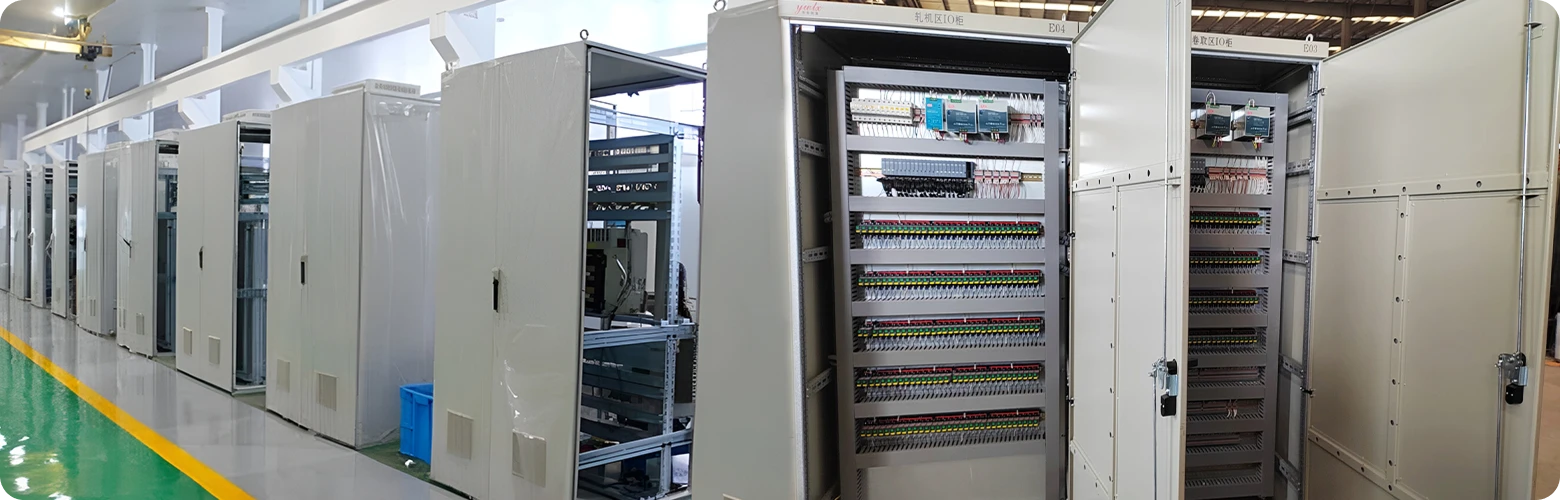
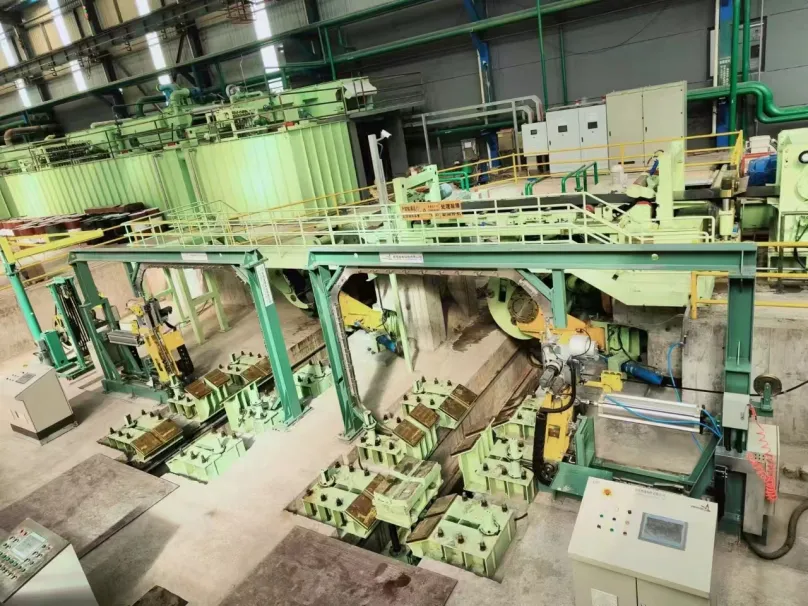
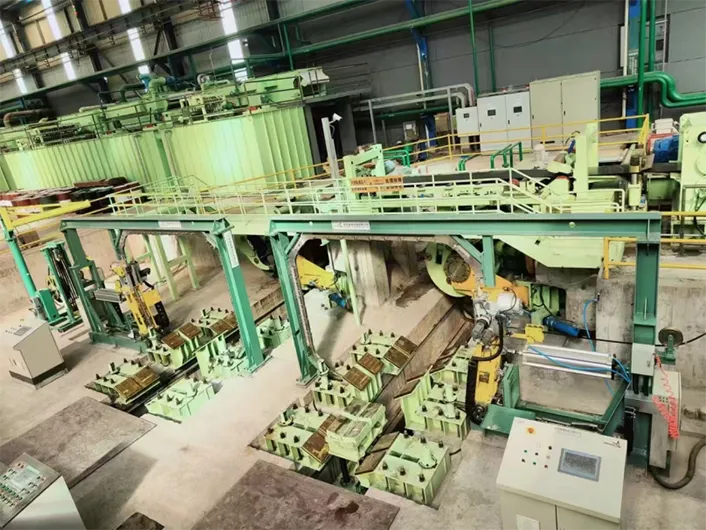
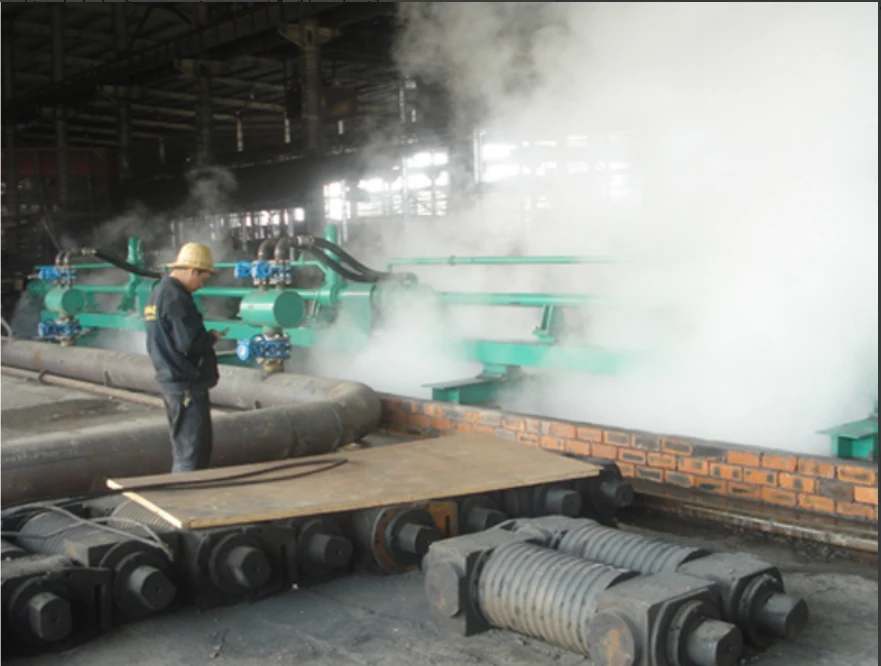

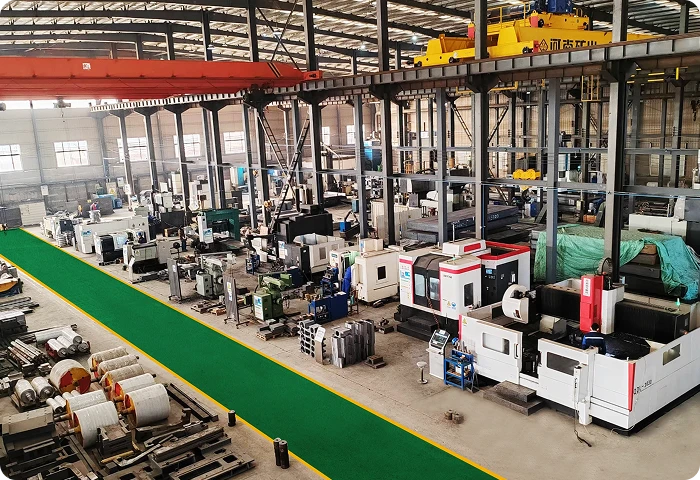
Yang Wang Li Xin operates a state-of-the-art facility over 66,000 square meters,and our manufacturing facility is fully equipped with high-tech machinery and high-capacity cranes. This enables us to handle large work pieces measuring 4.5m in width, 10m in length, and 1.5m in height, guaranteeing our capacity to produce 1800mm skin-pass mills and 1450mm rolling mills. The individual piece can weigh up to 100 tons.

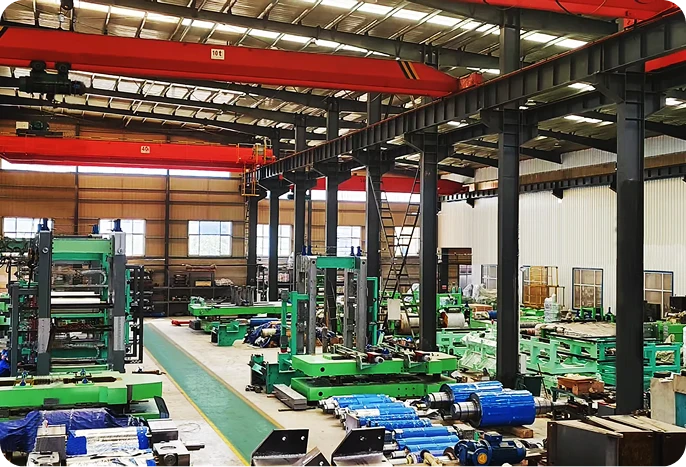

Quality is fundamental to the enterprise survival. We have established a comprehensive and meticulous quality management system and have successfully obtained ISO14000 certification. Starting from the design source, it supervises the entire production cycle, including design, procurement, processing, assembly, in-factory testing, installation, and online commissioning. The workshop is equipped with measuring tools like vernier calipers, spectrometers, hardness testers, and ultrasonic flaw detectors. They are used to check materials and control tolerances to ensure the final equipment meets or exceeds requirements. All products have a unique code, This enables the easy identification and traceability of the equipment components and ensures full control of quality.


-
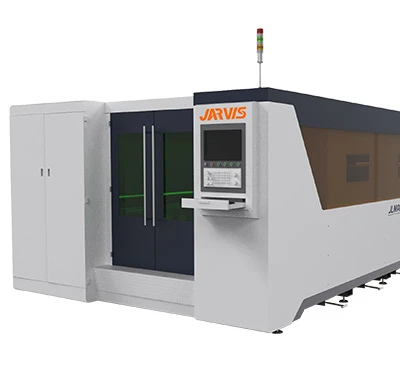 Quality Determinants in Hot Rolling Mill ProductsThe hot rolling mill serves as the critical process stage where fundamental product quality characteristics are established. While steel chemistry is determined during primary production, the hot steel rolling mill controls the thermomechanical processing that develops the final microstructure and mechanical properties. Several interrelated factors contribute to this quality-determining function t
 -
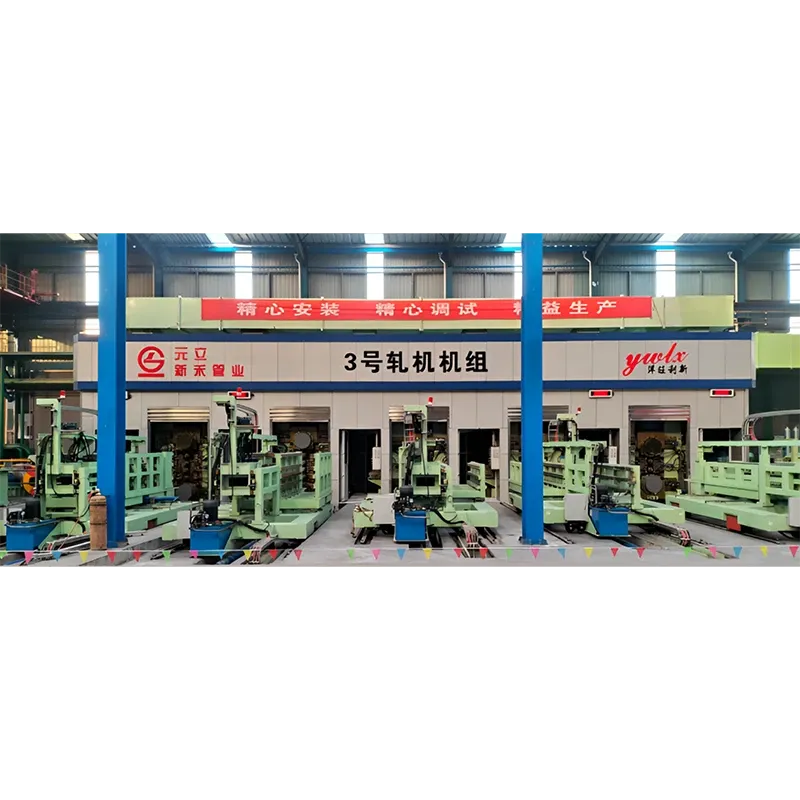 The Application of Temper Mill in Pickling LineIn the intricate world of steel processing, the temper mill holds a significant position, especially when integrated with the pickling line. The pickling line is crucial for removing oxides, rust, and other impurities from the surface of steel, while the temper mill further refines and improves the quality of the steel after pickling. The Role of Temper Mill in the Pickling Line Process After the
 -
 water quenching processIn the realm of steel manufacturing, the role of a primary rolling mill manufacturer holds a pivotal significance. These manufacturers not only design and produce the critical machinery needed for the steel industry, but they also ensure that the quality, efficiency, and reliability of the production process are up to par with global standards. The importance of a competent rolling mill manufactur


